Searching for the best digital hall pass system can quickly turn into a sea of similar-sounding features.
Digital passes? Check. Student tracking? Check. Reports? Probably.
But here’s the more important question: Will the system actually work when hundreds or thousands of students and staff are using it during a real school day?
The best hall pass systems don’t simply convert a paper process into a digital one. They help schools set expectations, manage student movement at scale, give staff useful information in the moment, and turn everyday pass activity into smarter decisions.
If you’re comparing solutions, put these seven capabilities at the top of your list.
1. Real-Time, Building-Wide Visibility.
When a student leaves class, staff shouldn’t have to guess where they went or how long they’ve been gone.
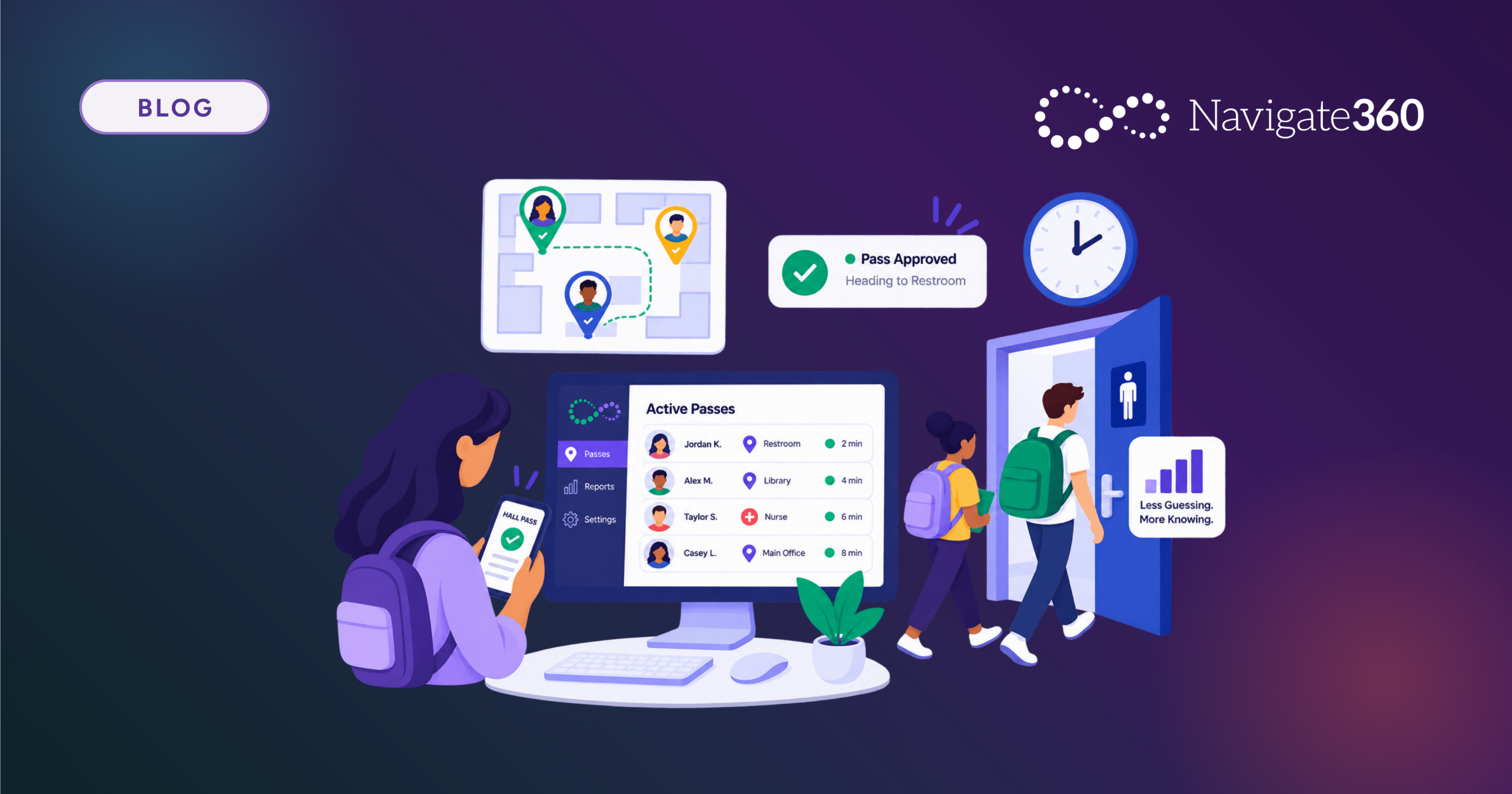
The best digital hall pass systems provide real-time visibility into active passes, giving authorized staff a clear view of who is out of class, where they’re headed, and how long they’ve been away.
That visibility should extend beyond the teacher who issued the pass. With shared, building-wide access, a staff member who encounters a student in the hallway can quickly understand where that student is supposed to be—without making a call, sending a message, or tracking down another teacher.
The result is a clearer picture of student movement as it happens and less guesswork when students are out of class.
Ask vendors: Can authorized staff see active passes and student movement across the building in real time?
2. Configurable Hallway Traffic Controls.
Knowing five students are headed toward the same location is useful. Preventing unnecessary congestion before it happens is better.
The best digital hall pass system gives schools controls to actively manage hallway traffic, not simply document it.
Think beyond basic approvals. Can you limit the number of students headed to a particular destination? Set daily pass limits? Establish times when passes shouldn’t be issued? Prevent certain students from having overlapping passes?
Strong pass management gives administrators the flexibility to turn school policies into workflows that are easier to apply consistently.
Ask vendors: What can we configure—and what still depends on staff remembering a rule?
3. Reporting That Reveals Student Movement Patterns.
One long pass could mean nothing. The seventh long pass this month? That’s worth knowing.
Your system should make it easy to identify frequent pass users, repeated destinations, unusually long trips, high-volume time periods, and other potentially concerning patterns in student movement.
That’s where pass data becomes more valuable than a simple digital record.
Instead of relying on a teacher to remember that a student seems to leave fourth period every day, administrators can use actual reports to ask better questions and make data-informed decisions.
Ask vendors: Can we quickly identify patterns at both the student and school level?
4. Automatic Tracking of Time Out of Class.
Students need to leave class sometimes. That’s reality.
But schools should know when routine movement starts becoming lost instructional time.
Look for a system that can track student pass duration automatically and make it easy to understand how much time students are spending outside the classroom.
That doesn’t mean scrutinizing every bathroom break. It means giving educators enough information to distinguish a normal trip from a recurring pattern that’s cutting into learning.
When students are out of class, the system should do the tracking—not the teacher’s memory.
Ask vendors: Can we see time out of class by student, period, destination, or schoolwide?
5. Fast, Flexible Workflows That Drive Adoption.
A hall pass system can have every feature imaginable and still fail if teachers don’t enjoy using it.
This matters.
Teachers shouldn’t have to stop instruction, navigate multiple screens, or manage another cumbersome process every time a student needs to leave the classroom.
Evaluate how quickly passes can be created and approved. Consider whether the solution works across student devices, shared devices, kiosks, and teacher-managed workflows.
Especially in a high school, where pass volume can be significant, a few unnecessary clicks multiplied across hundreds of daily requests become a very real burden.
The best technology should disappear into the workflow—not become the workflow.
Ask vendors: How do you make rollout and adoption easy for teachers, students, and staff?
6. Flexibility to Fit Your School’s Policies and Workflows.
Your pass policy isn’t one-size-fits-all. Your system shouldn’t be either.
Elementary school movement doesn’t look like middle school movement. And middle school definitely doesn’t look like high school.
Your digital hall pass shouldn’t force every building, grade level, teacher, and student into the exact same workflow.
Look for flexibility.
Schools may need different pass limits, destinations, restrictions, schedules, or expectations depending on the building or student population. Administrators should be able to configure those expectations without creating a maze for teachers.
A system that adapts to your school is far more valuable than one that requires your school to adapt to it.
Ask vendors: How much can we configure the system based on our existing policies and workflows?
7. Connected Student Data and Insights.
Here’s one capability that’s easy to overlook during a product demo:
What happens to the data next?
Student movement can provide context that goes beyond the hallway. Frequent passes, repeated time away from instruction, or changes in movement patterns may be relevant to broader conversations about student behavior and support.
That’s why the best digital hall pass system shouldn’t be evaluated as an isolated utility.
Consider how the solution fits within the larger ecosystem your educators already use. The more connected your tools are, the easier it becomes to understand what’s happening across the student experience instead of piecing together disconnected signals.
Ask vendors: How does hall pass data connect to the bigger picture of student behavior and support?
The Best Digital Hall Pass System Does More Than Just Manage Passes
The right digital hall pass system shouldn’t simply tell you that a student left the classroom. It should give your team the visibility, control, and context to better manage student movement across the entire school day.
That’s where Navigate360 Hall Pass stands apart.
Navigate360 Hall Pass gives schools real-time visibility into active passes while providing tools to manage when, where, and how students move throughout the building. Staff can see who’s out, where they’re headed, and how long they’ve been gone—without relying on paper passes, memory, or disconnected processes.
Schools can also establish pass limits and restrictions that support their policies, identify patterns in student movement, and better understand how time out of class may be affecting instructional time.
And because hall pass activity can tell you more than who’s in the hallway, Navigate360 helps schools connect those patterns to a broader understanding of student behavior and support.
Less Guessing. More Knowing. One Smarter Hall Pass.
See what smarter hallway visibility looks like in action.
Watch the on-demand webinar, Who’s in the Hall Right Now?, to learn how better student movement data can help schools spot patterns, intervene earlier, and protect instructional time.