The U.S. Secret Service studied 67 averted plots against K-12 schools from 2006 to 2018. Every plot was stopped because someone reported a concern.
According to Dr. Allison Willemin, any adult in a school should be able to receive a concern. The harder question: “Do they know what to do with it once it’s received?”
That gap between reporting and response brought school leaders, school resource officers (SROs), and mental health professionals together for The Next Step: From Reporting Concerns to Preventing Violence, a webinar from Safe and Sound Schools and Navigate360.
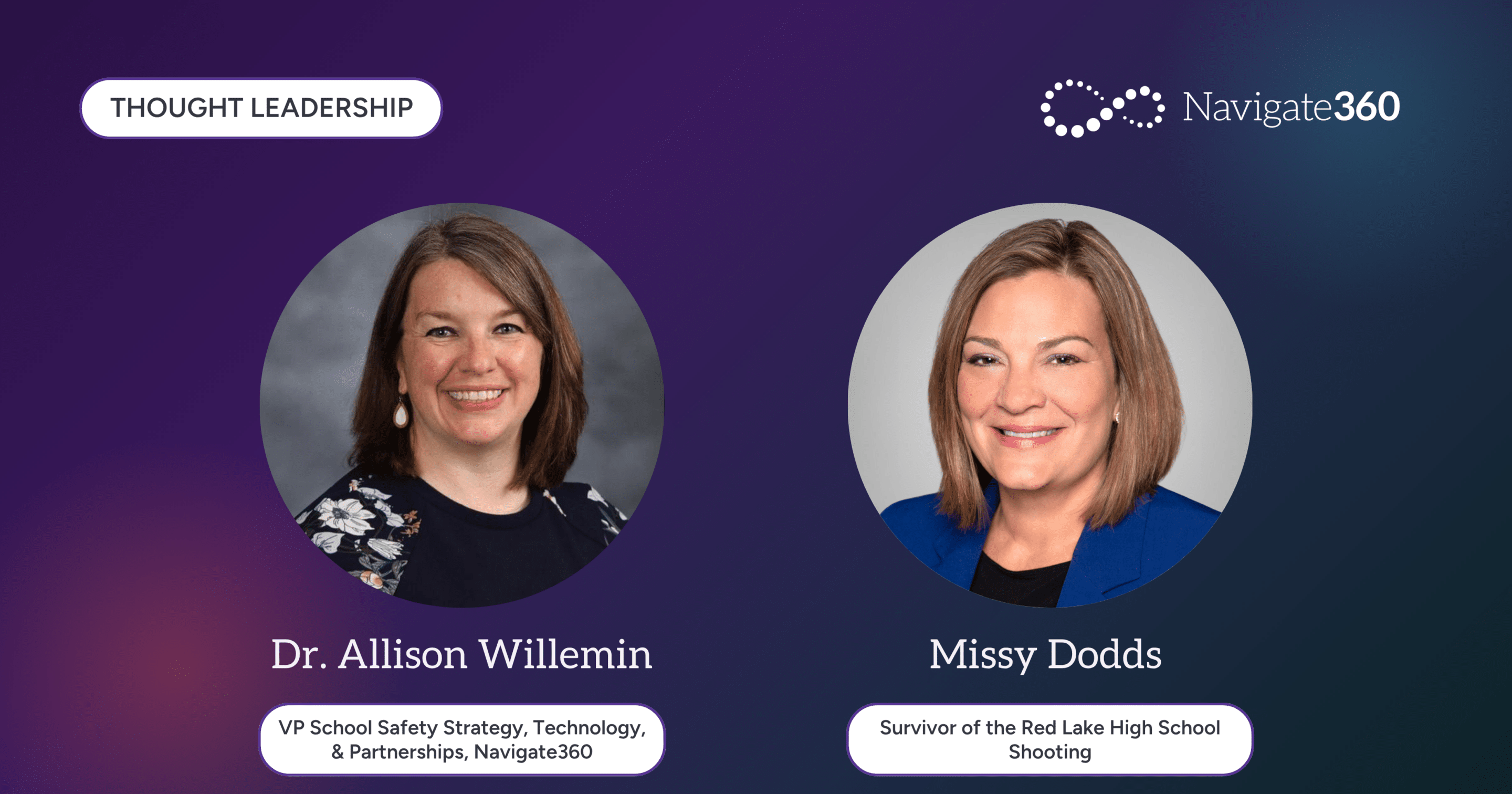
Michele Gay, Executive Director and Co-Founder of Safe and Sound Schools, moderated a conversation with Mo Canady, Executive Director of the National Association of School Resource Officers (NASRO), and Dr. Willemin, Vice President of School Safety Strategy, Technology, & Partnerships at Navigate360. The panel shared prevention-focused school safety strategies for receiving, triaging, sharing, and documenting concerns from students and staff.
Every Concern Needs a Clear Next Step
Students wouldn’t know to seek out a threat assessment team. Instead, they mention a concern to a trusted adult in the school community, such as a coach or nurse, sometimes only in passing: a threat they overheard, a troubling text, or a social media post.
Most of those adults are not trained in behavioral threat assessment: the process a team uses to gather information about a concerning behavior, judge whether a student poses a risk of harm, and plan support.
Dr. Willemin urged principals and district leaders to decide in advance where every concern goes: a multidisciplinary team of staff from different professions who review each concern together.
The panelists described assembling teams that include:
- A school administrator
- Mental health professionals, such as school psychologists and counselors
- School nurses
- An SRO or local law enforcement partner
The team’s first question, according to Canady: Does the behavior break the law? He compared the line to the difference between a shoving match and an assault. Most concerns, such as an angry comment or a disturbing drawing, fall on the noncriminal side and call for school-based support.
When a behavior does break the law, a criminal investigation can run alongside the threat assessment.
Build a Team That Trusts Each Other
Threat assessment depends on every member speaking up, but rank can get in the way. For example, a teacher may hesitate to challenge a principal who also writes their evaluation, Dr. Willemin noted, unless that team has built trust first.
Members also review threats of violence and self-harm while carrying their own trauma and adverse childhood experiences (ACEs). A trauma-informed team acknowledges how each member’s background may shape their judgement in a case.
Dr. Willemin recommended building a checklist from state law and board policy. When things happen fast, having something to reference is a lifesaver. For example, she still lists her phone charger when she packs, because rushed people skip steps.
Teams also need a shared language. Even after years with two SROs she calls “the gold standard,” Dr. Willemin would stop meetings to ask for a translation:
“That’s cop speak. Please put it in English.”
Plain language matters most when members need to share what they know about a student.
Connect the Dots by Sharing Information Across the Team
In one low-level case Dr. Willemin worked on, the strongest push for mental health support came from the SRO.
A student’s emotional outburst had led to a threat assessment, which found little cause for concern and no need for mental health services. But the SRO had been to the student’s home several times and found out about problems there.
That context explained the outburst, and he asked the team to check in on the student more often. Yet many staff withhold information, such as discipline history or concerns at home, because of privacy laws.
Under FERPA, the federal student privacy law, school officials with a “legitimate educational interest” can access the records they need to do their jobs. Dr. Willemin noted that those jobs include keeping students safe.
Because SROs qualify only under criteria the district sets, Dr. Willemin recommended reviewing board policy and SRO memorandum of understanding (MOU), which defines what the SRO and school can share.
Dr. Willemin’s goal for every case: move a student off a pathway of violence and onto a pathway of care, with safety and care management plans that address the source of the behavior.
Not Every Concern Becomes a Case
Often, a team finds that the student behind a report is not on a path toward violence but may still be struggling.
To keep those students from falling off the radar until a more serious report arrives, Dr. Willemin recommended folding threat assessment into multi-tiered systems of support (MTSS), the framework schools already used to support students at each level of need:
- Tier 1 supports every student: A daily “good morning” from a trusted adult and schoolwide expectations.
- Tier 2 targets small groups: For example, a counselor-led group on conflict resolution.
- Tier 3 focuses on one student: Intensive, individualize interventions. The tiers also flag escalation.
In one school, Gay described a student’s move from Tier 2 to Tier 3 support signaled that the case belonged in the formal threat assessment process. Whichever path a team chooses the next adult who works with the student needs to know what happened.
The Smallest Concerns Show Up First
Small behaviors that go unchecked don’t stay small. The students who struggle in second and third grade are often the ones who were sent to time-out again and again in preschool and kindergarten. However, without the data, no one sees the patterns.
Catching concerns early requires two systems:
- A way for students to speak up: Anonymous reporting lets students who experience bullying say, “This is happening to me. Someone helps,” without giving a name.
- A way to connect the dots: Navigate360’s Hall Pass and Behavioral Case Manager keeps one shared record, so staff see when the same student keeps coming up.
The goal isn’t to accuse anyone, Petitte shared. It’s to know who to talk to, so staff can offer support before a concern grows into something bigger.
Document Every Concern So Care Continues
One attendee described an administrator who chose not to document a threat at all.
Educators are often trained to keep sensitive details out of writing in case they are wrong or share too much, Gay said. In threat assessment, missing records can leave a student without support.
Dr. Willemin tests documentation with a scenario: You win the lottery tonight and never come back to work.
“How is that child still going to be cared for if you’re not there?” she asked.
Canady added that SROs are trained to record every concern, action, and outcome as if they might testify about the case years later.
Complete records also reveal patterns, such as several students in one grade talking about a video game in a concerning way, but only when the whole multidisciplinary team records concerns in one place.
Navigate360’s Behavioral Case Manager gives the team one shared record of concerns, assessments, and interventions, so a student’s care never depends on one person.
Don’t Wait for an Emergency to Build Your Team
Canady’s advice to administrators: if you don’t have a multidisciplinary team, build one. If you have one, support the team with training and the right members.
Dr. Willemin added one more step: get to know your SROs and local law enforcement now, through everyday conversations about sports or family. “The first time you talk to them should not be because you’re calling them for a threat assessment, or there’s an emergency going on,” she said.
Safe schools start with trust between educators, mental health professionals, and law enforcement, built before a crisis. Watch the full webinar to hear where the panel draws the line on criminal behavior and why teams should review even successful cases.